CeBER Charts the Course- Turning Food Waste into Energy!

The Centre for Bioprocess Engineering Research (CeBER) is advancing efforts within the food-waste-energy nexus as part of UCT's Khusela Ikamva initiative—a five-year, multi-disciplinary program aligned with UCT’s Vision 2030 sustainability goals. Through this project, CeBER aims to provide a sustainable and innovative solution for the massive amounts of food and organic waste generated on campus.
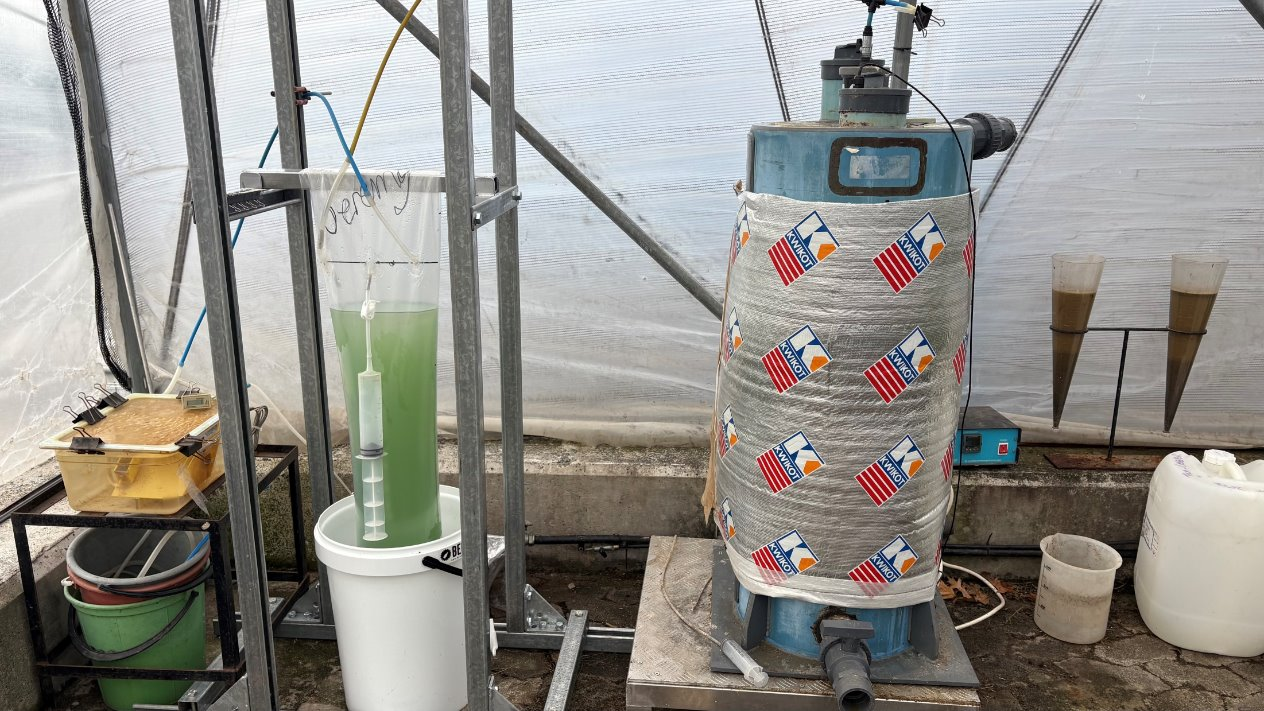
At the heart of this initiative is a cutting-edge biorefinery system that transforms food waste into valuable resources through a multi-stage, nature-based process. The system begins with anaerobic digestion, where microorganisms break down organic waste to produce biogas—a renewable energy source. This process not only generates energy but also diverts waste from landfills, reducing greenhouse gas emissions.
To enhance the quality of the biogas, algae-based scrubbing technology is employed. Algae absorb carbon dioxide from the biogas, upgrading it to a higher grade of methane suitable for energy applications. This step also allows the system to act as a carbon sink, contributing to climate mitigation efforts.
The liquid fraction of the digestion process, known as digestate, is further treated using aeroponics—a soil-free plant cultivation method. This final polishing step helps recover nutrients and purify the liquid, creating a closed-loop system that maximizes resource recovery and minimizes environmental impact.
CeBER’s integrated biorefinery exemplifies a holistic approach to sustainability, combining waste management, renewable energy production, carbon capture, and nutrient recycling. Interest around the circular economy and related "waste to energy" projects have steadily been increasing and CeBER's work been featured both by UCT news as well as SABC news.
To find out more about this exciting project click here.